

Organisational culture is a structural success factor.
We make culture effective in everyday practice. Request a consultation!Meet the team!Why culture initiatives often fail to deliver.
In many organisations, culture is treated as a by-product: important, but not manageable. Initiatives often remain abstract, follow short-term trends or are reduced to values workshops with little lasting impact.
Common patterns include:
- Culture is defined through statements rather than behaviour
- Values are articulated but not embedded in everyday practice
- Leaders model culture inconsistently
- Onboarding remains operational rather than cultural
- Change is planned, but not actively carried by the organisation
- Employees experience contradictions between aspiration and reality
The result: culture remains vague. Direction is lacking. Engagement and identification with the organisation decline.

Our understanding of organisational culture.
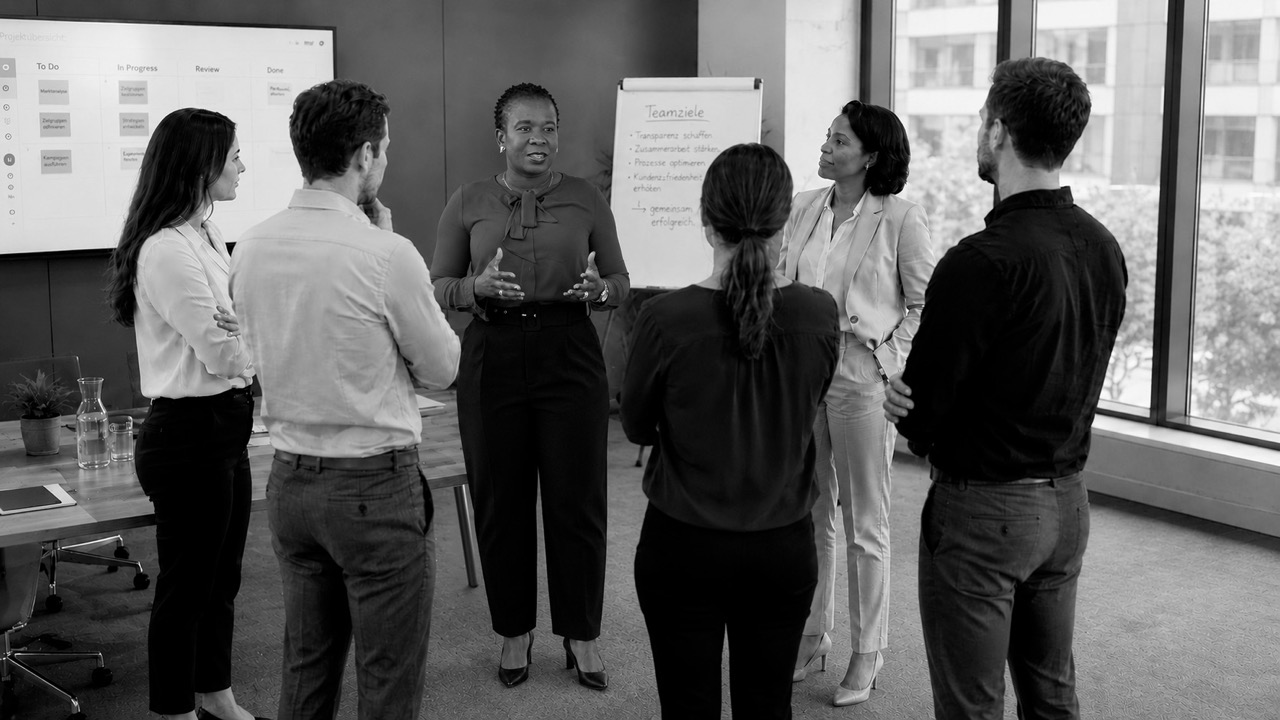
We do not regard culture as an atmosphere or a set of values on paper, but as a system of behaviours, decision-making patterns and everyday routines.
Culture becomes visible through leadership, collaboration, communication and decision-making under pressure.
The Cultural Plus is a structured approach that makes culture visible, manageable and effective, without oversimplifying or instrumentalising it.
The focus areas of The Cultural Plus
We work with four interconnected focus areas that create sustainable cultural change.
Each addresses a critical dimension of cultural effectiveness.
Onboarding & Integration
Culture begins on day one.
Onboarding determines how quickly new employees find their footing, not only operationally but culturally. People who do not understand the unwritten rules remain outsiders.
Effective onboarding communicates:
- expectations and ground rules
- decision-making principles
- cultural norms and behaviours
- leadership expectations
Deliberate cultural integration shortens onboarding periods and strengthens engagement, effectiveness and belonging from the outset.

Lived reality
“I understand the processes, but I do not know how decisions are really made here.”
Cultural integration
“I understand what matters here, how people work together and what is expected.”

Organisational Culture & Cultural Change
Change only works when culture supports it.
Cultural change cannot be imposed. It emerges when new behaviours are systematically enabled, expected and reinforced.
We support organisations in:
- making existing cultural patterns visible
- clearly defining a desired culture
- aligning leadership and structures
- embedding change into everyday practice
Effective cultural change closes the gap between aspiration and reality.
Official statement
“We want to become more agile.”
Everyday reality
“Decisions take weeks and accountability remains unclear.”
Leadership Principles
Leadership makes culture visible.
Culture is shaped primarily through leadership. Leadership Principles create clarity around how leadership is understood, demonstrated and expected.
We support organisations in:
- defining clear leadership principles
- translating principles into observable behaviours
- integrating them into leadership and decision-making processes
Leadership Principles provide direction without standardising leadership.

Unclear
“Every manager has a slightly different understanding of leadership.”
Clearly defined
“Everyone understands what leadership means here and how it should be practised.”

Employee Experience
Culture is shaped in everyday moments.
Employee Experience describes the totality of experiences that shape employees’ day-to-day work lives—from onboarding and daily collaboration to transitions, changes, and even leaving the company. Thus, Employee Experience is the visible result of a corporate culture put into practice. This is particularly evident during periods of change or employee turnover. How organizations handle separations, role changes, or conflicts is not limited to those directly involved. Informal communication—the so-called “office grapevine”—acts as an amplifier here. Social initiatives or material incentives cannot compensate for inconsistent behavior. Critical signals have a cultural impact that extends far beyond the specific incident.
Against this backdrop, we view the Employee Experience as the intersection of all Cultural Plus components. In our work, we therefore examine, among other things:
- Transitions and critical moments in everyday work life
- Communication and decision-making processes
- Collaboration and leadership behavior under pressure
- Recognition, feedback, and development across hierarchical boundaries
Lived reality
“My contribution is expected, but rarely acknowledged or recognised.”
Cultural impact
“My contribution is seen, understood and appreciated.”
Shaping culture consciously.
If your company culture isn’t having the impact you need, we should talk.
The impact of The Cultural Plus
A consciously designed Employee Experience is not an additional programme. It is the outcome of consistent leadership and a lived culture.
In most cases, sustained investment in this area leads to stronger employee retention, greater organisational stability and deeper trust. These are qualities that cannot always be measured in the short term, but significantly influence organisational performance over time.
When culture is intentionally developed:
- identification with organisational goals increases
- leadership becomes more consistent and visible
- collaboration improves significantly
- engagement grows sustainably
Culture is no longer discussed. It is lived.

How we deliver culture development
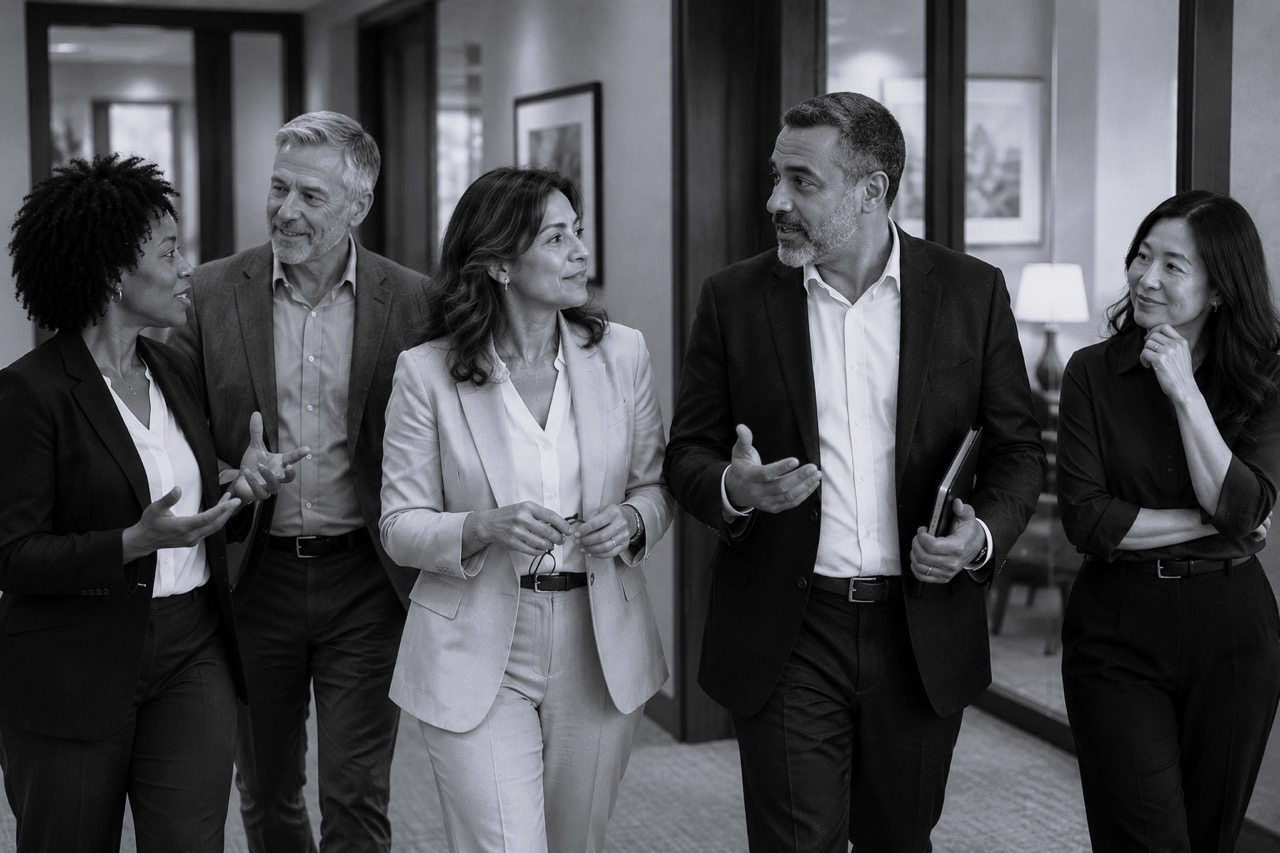
We do not work on mission statements. We work on impact.
That means:
- analysing real cultural patterns
- working with leaders, teams and organisational structures
- embedding change into everyday practice rather than relying on isolated initiatives
- providing continuous support rather than one-off interventions
The Cultural Plus combines clarity, structure and practical realism.
Make culture effective.
If your culture is not delivering the impact your organisation needs, we should talk.